
Developing Young Athletes’ Confidence on Game Day
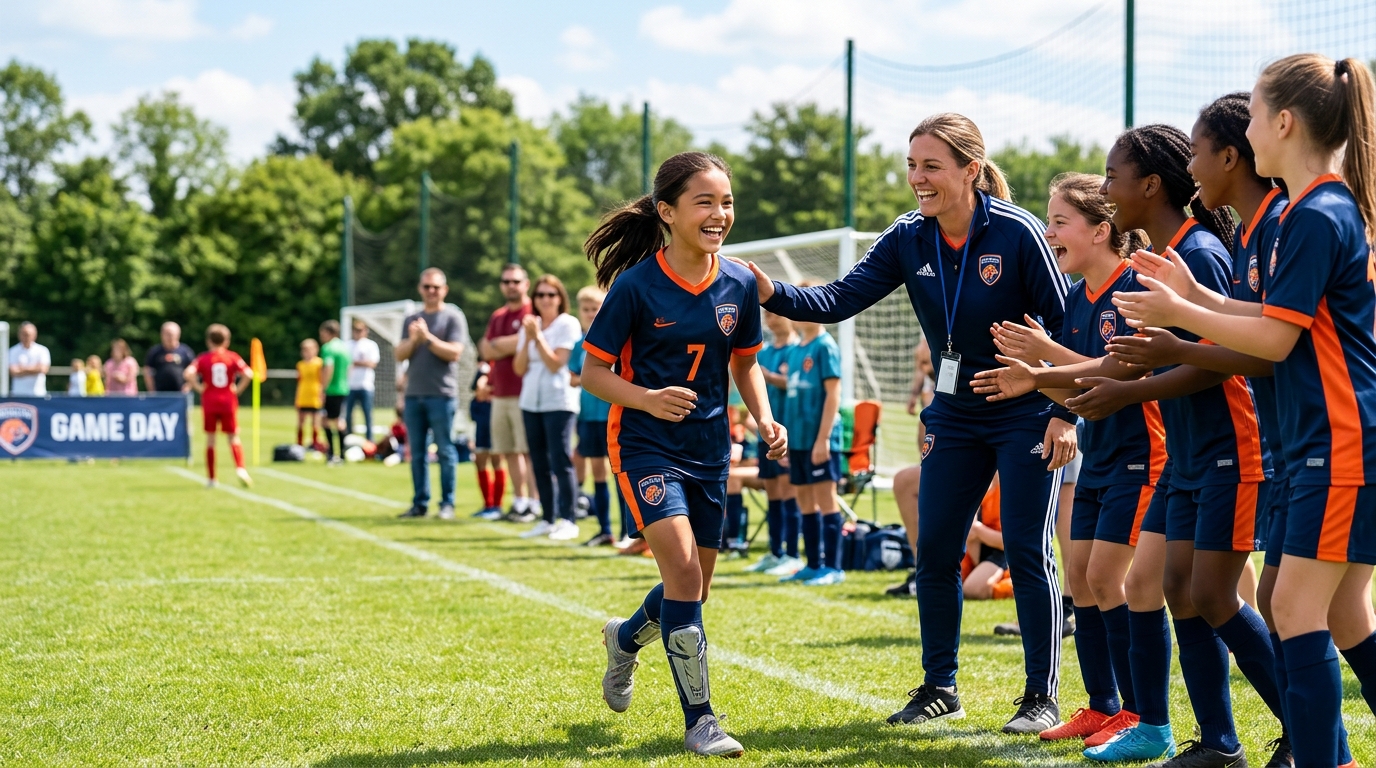
Game-day confidence is not something young athletes either have or lack. It is a skill coaches can build through preparation, communication and consistent routines. For youth and amateur players, nerves are normal: they may worry about making mistakes, disappointing teammates or facing stronger opposition. A coach’s job is not to eliminate those feelings, but to give athletes the tools to perform alongside them.
Build Confidence Before Game Day
Confidence grows from evidence. Players feel more assured when they can look back on training and recognise that they have practised the situations they will face in competition.
Make training sessions relevant, progressive and encouraging. Create opportunities for every athlete to experience small successes, whether that is completing a passing sequence, making a defensive stop or communicating effectively with a teammate.
Use these coaching habits during the week:
- Set simple, controllable goals such as “call for the ball,” “win your first challenge” or “keep moving after a mistake.”
- Rehearse game-like moments in practice, including pressure drills, restarts, finishing chances and late-game scenarios.
- Point out specific improvements rather than offering vague praise. Say, “Your positioning gave you time to receive the ball,” instead of only saying, “Well done.”
- Track progress over perfection. Help athletes compare themselves with their own previous performances, not just the strongest player on the team.
When players know what they have prepared for, they are less likely to feel overwhelmed by the unknown.
Create a Calm, Repeatable Pre-Game Routine
A predictable routine helps young athletes shift their attention from worrying to performing. Keep it short and age-appropriate. Too many instructions before a match can increase anxiety and reduce clarity.
Encourage each player to develop a personal routine that takes five to ten minutes. It might include:
- Arriving early enough to avoid rushing
- Completing a familiar warm-up sequence
- Listening to a calming or energising song
- Taking three slow breaths
- Visualising one positive action, such as a strong first pass or confident tackle
- Repeating a cue phrase such as “quick feet, clear mind” or “work hard for the team”
As a coach, make your team talk focused and concise. Give players two or three priorities, not a long tactical lecture. For example: “Communicate early, support the player on the ball and react quickly when we lose possession.” Clear instructions give athletes something useful to focus on immediately.
Use Language That Reduces Fear of Mistakes
Young athletes often take their coach’s words very seriously. If your sideline communication is dominated by criticism, players may become cautious and afraid to try. Confidence suffers when athletes believe one mistake will lead to embarrassment or being taken off.
Instead, use language that directs attention towards the next action:
- Replace “Don’t lose it” with “Keep it simple and find support.”
- Replace “What were you thinking?” with “Reset—what is your next job?”
- Replace “You have to score” with “Be brave and make a positive decision.”
This does not mean ignoring standards. Athletes still need honest feedback and accountability. The difference is delivering feedback in a way that teaches rather than threatens. Correct the action, explain the solution and let the player move on.
Give Every Athlete a Meaningful Role
Confidence can drop quickly when players feel invisible or believe they only matter if they score goals or make highlight-reel plays. Reinforce that every role contributes to the team’s success.
Before the game, identify one valuable responsibility for each athlete. A defender may organise the back line. A substitute may bring energy and encouragement from the bench. A quieter player may be tasked with communicating key information. When athletes understand how they can help, they are more likely to play with purpose.
Be especially intentional with substitutes. Explain when possible what you want them to observe, prepare for and contribute when they enter. A player who is ready for their moment is more likely to perform confidently.
Teach Players How to Respond to Setbacks
Confident athletes are not mistake-free; they recover faster. Build a team culture where errors are viewed as information, not identity.
Teach a simple reset routine:
- Recognise the mistake without dwelling on it.
- Breathe and use a cue word such as “next” or “reset.”
- Refocus on the next small action: recover position, communicate or offer support.
Praise visible resilience on game day. Notice the player who tracks back after losing possession, encourages a teammate after an error or keeps working when the score is against them. These behaviours show the confidence that matters most: trust in their ability to respond.
Review Performances Positively
Post-game feedback shapes how players approach the next match. Start by asking athletes what went well, what they learned and what they want to improve. Keep the review balanced and specific.
Finish with one clear message: confidence is built through preparation, effort and recovery—not flawless performance. When coaches consistently model calmness, clarity and belief, young athletes learn to bring those same qualities onto the field, court or pitch.
Run your club with SphereHyx
Teams, attendance, payments and tournaments — all in one place. Free to start.
Create your club free