
The Pre-Game Routine That Gets Teams Focused and Ready
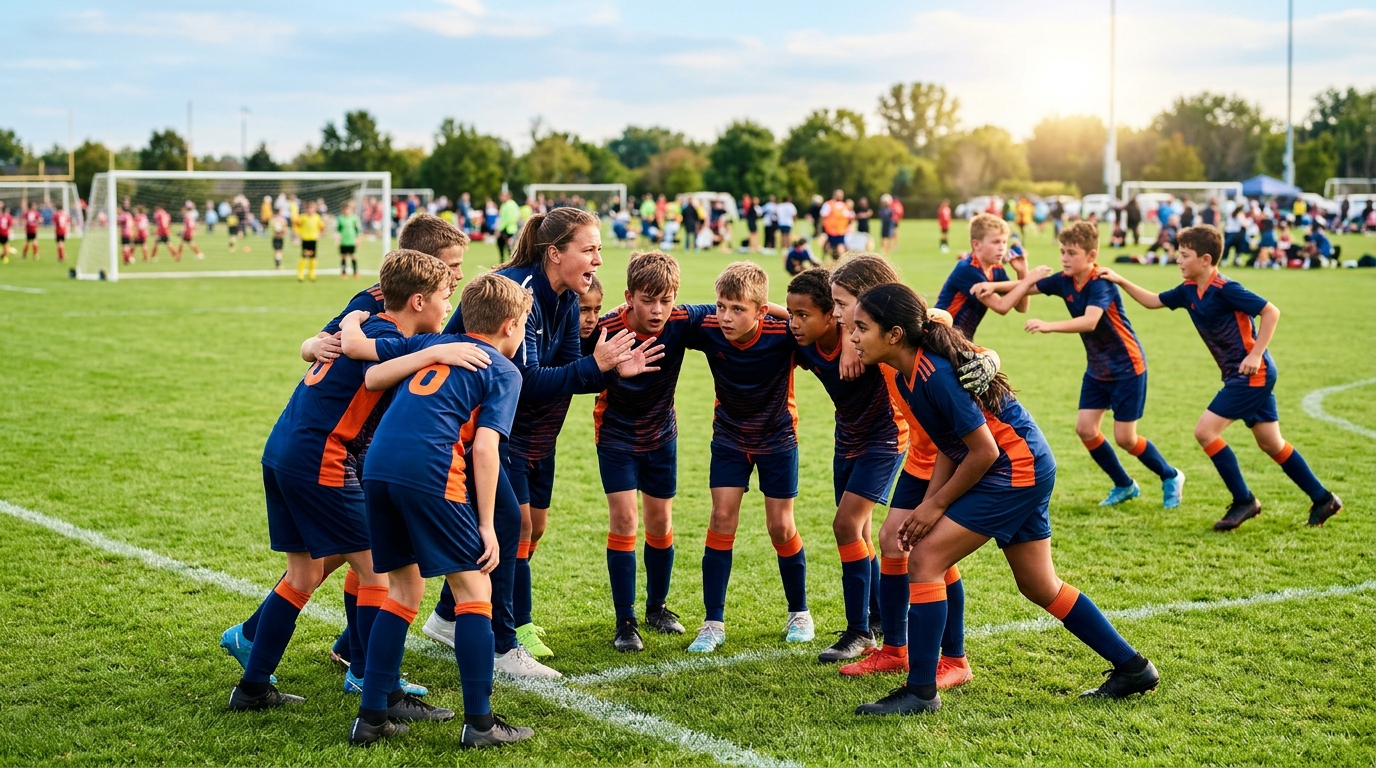
A strong pre-game routine does not need to be long, loud or complicated. For youth and amateur teams, the best routines create calm, clarity and connection before the whistle. Players should know where to be, what to do and what matters most.
The aim is not to manufacture hype. It is to help every athlete shift from school, work, travel or social distractions into game mode. A repeatable structure also reduces anxiety: when players know the routine, they can focus their energy on performance.
Start With a Consistent Arrival Plan
Set a clear arrival time and make the first 10 minutes predictable. This is especially important for young players, who may arrive at different energy levels or feel nervous before a match.
Your arrival plan can include:
- Players checking in with a coach or captain
- Equipment and water bottles placed in a designated area
- A quick injury, illness or availability check
- Changing and preparing independently where appropriate
- A light individual ball or movement activity
Avoid starting with a long tactical talk. Players who have just arrived are rarely ready to absorb detailed instructions. Give them time to settle, greet teammates and transition mentally.
A club management platform such as SphereHyx can also help coaches keep pre-game communication organised, from fixture reminders to availability and team updates. When logistics are clear before game day, the routine can focus on performance rather than chasing information.
Use a Warm-Up With Purpose
A good warm-up should prepare players physically and mentally. It should move from simple to game-specific, with minimal standing around. For most youth and amateur teams, 20 to 30 minutes is enough when planned well.
A practical warm-up sequence is:
- Raise: Light jogging, skipping, shuffling and movement patterns to raise body temperature.
- Mobilise: Dynamic mobility for ankles, hips, hamstrings, shoulders and other sport-specific areas.
- Activate: Short exercises for balance, stability, acceleration and controlled changes of direction.
- Rehearse: Passing, shooting, defensive footwork, small-sided play or other skills players will use immediately.
- Prime: A few short, high-quality bursts that match game intensity.
Keep instructions brief. Demonstrate once, then let players move. If the warm-up includes a ball or sport-specific equipment early, players are often more engaged and relaxed.
Give Players One Clear Focus
Too many tactical instructions create confusion. Before the game, choose one team focus and, if needed, one individual focus for each player.
Good team focuses are specific and controllable, such as:
- “Win the first five minutes with our work rate.”
- “Communicate early in defence.”
- “Move the ball quickly after we regain possession.”
- “Stay connected and support the player on the ball.”
Avoid vague messages like “play well” or “try harder.” Players need actions they can recognise and repeat under pressure.
For individual players, keep the message even simpler. A nervous goalkeeper might focus on their starting position. A forward might focus on making the first run behind the defence. A basketball player might focus on talking on every defensive possession.
Build Connection Before Competition
Teams play better when players feel connected. This does not require an emotional speech every week. A short, consistent moment of togetherness is often more effective.
Try one of these options:
- A captain-led huddle where each player shares one word for the team
- Partners briefly discussing their personal game focus
- A quick acknowledgement of effort, improvement or good teamwork from training
- A simple team chant or clap before taking the field
Keep this positive and inclusive. Pre-game is not the time to criticise mistakes from the previous match or publicly single out a player. If corrections are needed, make them calm, specific and private.
Keep the Final Team Talk Short
The final talk should usually last no more than two or three minutes. By this point, players need to move, breathe and prepare to compete—not sit through a lecture.
Use a simple structure:
- Identity: Remind players who they are at their best.
- Focus: Repeat the one key team objective.
- Belief: Confirm that they are prepared and ready.
For example: “We are a team that works for each other. Our focus is early communication and fast support. Trust your preparation, enjoy the challenge and compete for every play.”
Then stop talking. Let players carry the message onto the pitch, court or field.
Make the Routine Flexible, Not Fragile
Weather, late arrivals, venue changes and delayed kick-offs happen. Build a routine that can be shortened without losing its core elements: arrival, movement, focus and connection.
After each game, ask yourself:
- Did players look organised and engaged?
- Was the warm-up active enough?
- Could players explain the team focus?
- Did the routine help calm nervous athletes?
- What should we keep, remove or simplify next week?
The best pre-game routine is the one your players can follow confidently every week. Keep it clear, energetic and player-centred, and you will give your team a better chance of starting every game focused and ready.
Run your club with SphereHyx
Teams, attendance, payments and tournaments — all in one place. Free to start.
Create your club free